What Are the Top Vending Machine Solutions in China?
What are the top vending machine solutions in China? The answer depends less on a flashy screen than on the products, location, and service behind it. Rather than treating “top” as a fixed ranking, this guide compares solutions by practical fit. Options may include refrigerated machines for drinks and meals, touchscreen cabinets for mixed goods, and compact units for offices or campuses. Many systems support QR-based payments, remote inventory checks, and sales reporting, but features vary by provider and model. Small details matter. Can the machine keep chilled items at a stable temperature? Are restocking routes reliable?
Buyers should also examine installation, payment integration, maintenance response, software fees, and spare-part availability before signing a contract. A useful comparison weighs total operating cost against expected sales, not just the purchase price. Ask for references from locations similar to yours, and request a live demonstration using the products you plan to sell. Check how the dashboard flags low stock, faults, and temperature changes; a screen full of data is not automatically useful. These checks reflect the realities of daily operation, though local conditions can still surprise even experienced operators. This overview introduces leading Vending Machine Solutions in China and explains how to assess them with clear, evidence-based criteria. Some trade-offs are easy to miss. That is worth remembering.
China’s Vending Landscape: 2023 Retail Sales Reached RMB 47.15 Trillion
What Are the Top Vending Machine Solutions in China?
China’s Vending Landscape: 2023 Retail Sales Reached RMB 47.15 Trillion
China’s total retail sales of consumer goods reached RMB 47.15 trillion in 2023, according to official national statistics. This figure describes the broader retail market, not vending-machine sales alone. That distinction matters. It shows the scale of consumer spending, but it does not prove that every location can support a vending machine. Operators still need to assess foot traffic, product demand, rent, and restocking access.
Practical vending solutions combine reliable machines with simple, connected operations. Cashless payment options can reduce checkout friction, while remote inventory monitoring helps staff spot empty shelves before a busy period. Refrigerated units suit drinks and fresh snacks, but temperature control and regular cleaning require attention. Smart cabinets can offer a wider selection, though they may need more careful installation and loss monitoring. Small details matter: a machine beside a station exit may serve different needs from one in an office lobby. Technology helps, but it cannot fix a poor site choice. Operators may also misread early sales data; seasonal demand and nearby construction can distort results. A measured pilot gives teams a chance to adjust the product mix before expanding.
What Are the Top Vending Machine Solutions in China? - China’s Vending Landscape: 2023 Retail Sales Reached RMB 47.15 Trillion
| Retail Indicator |
2023 Figure |
Year-on-Year Change |
Relevance to Vending Solutions |
| Total retail sales of consumer goods |
RMB 47.15 trillion |
+7.2% |
Provides the overall retail-market context for unattended and automated retail. |
| Goods retail sales |
RMB 41.86 trillion |
+5.8% |
Packaged goods are a core product category for vending operations. |
| Catering revenue |
RMB 5.29 trillion |
+20.4% |
Growth in food service supports interest in convenient food and beverage formats. |
| Online retail sales |
RMB 15.43 trillion |
+11.0% |
Indicates the scale of digital commerce alongside physical retail channels. |
| Online retail sales of physical goods |
RMB 13.02 trillion |
+8.4% |
Accounted for 27.6% of total retail sales, reflecting the importance of digital purchasing. |
| Urban retail sales of consumer goods |
RMB 40.74 trillion |
+7.1% |
Urban locations form a substantial setting for automated retail access. |
| Rural retail sales of consumer goods |
RMB 6.41 trillion |
+8.0% |
Rural sales growth offers additional context when assessing potential locations beyond major cities. |
Source: National Bureau of Statistics of China, 2023 national economic and social development statistics. These figures describe China’s broader retail market; they are not vending-machine-specific sales data.
Core Machine Formats: Compare Smart Fridges, Coil Units, and Robotic Stores
China’s vending market is better understood through three formats: smart fridges, coil machines, and robotic stores. The China Chain Store & Franchise Association’s 2024 convenience-store report estimates 2023 industry sales at RMB 424.8 billion. That scale supports varied retail models, but does not make every unattended site profitable.
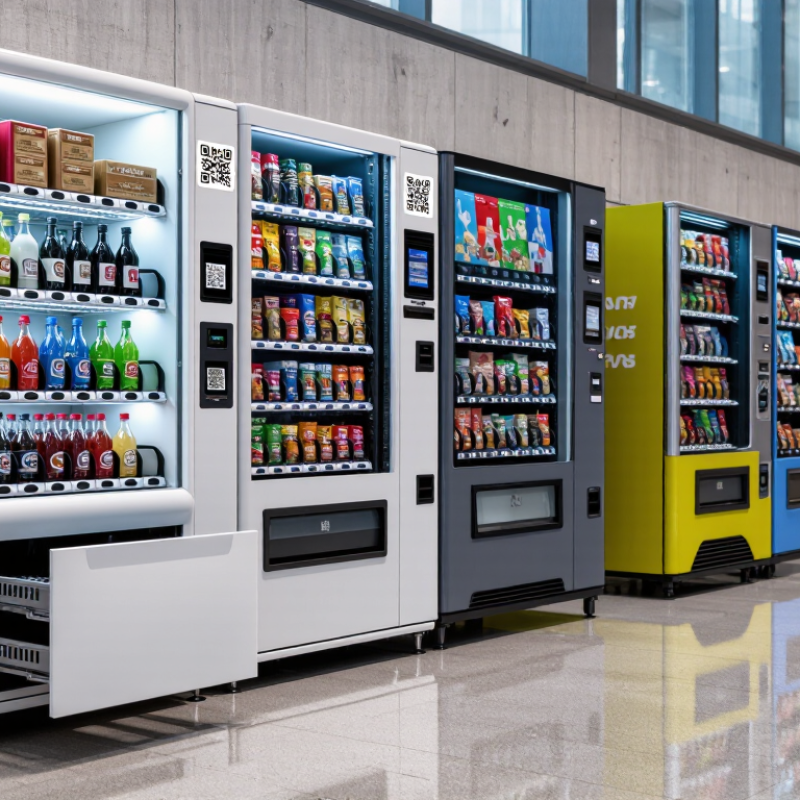
Smart fridges suit fresh meals, drinks, and mixed baskets. Customers open a chilled door, select items, and pay digitally; operators need reliable access control and temperature monitoring. Coil units are simpler. Their spirals visibly release packaged snacks or bottles, making stock checks and basic troubleshooting straightforward. They are less flexible with irregular products. A bent package can jam the coil. Small details matter.
Robotic stores can handle broader product ranges and complex picking, but require more equipment, software, and maintenance. The International Federation of Robotics reported 276,288 industrial robot installations in China in 2023, about 51% of global installations. This signals strong automation capacity, not proof that robotic shops outperform simpler machines. Site trials should compare sales per square metre, replenishment time, spoilage, and downtime. The awkward truth: a sophisticated store can still lose money if foot traffic is thin or service visits are slow.
Connected Operations: China Had 3.38 Million 5G Base Stations by 2023
China had about 3.38 million 5G base stations by the end of 2023, according to public industry figures. That scale gives connected vending operations a stronger foundation, especially in dense urban areas. It does not mean every machine has a flawless signal.
A connected vending machine can send stock alerts, temperature readings, and fault notifications to an operations dashboard. Staff might spot an empty drink shelf before the lunch rush, or investigate a cooling issue without visiting each location. Faster updates can help teams plan restocking routes and reduce unnecessary checks. Small details matter.
However, network quality can vary inside buildings, underground stations, and crowded venues. Machines still need reliable sensors, secure data handling, and a plan for temporary disconnections. Offline sales records and clear maintenance alerts are practical safeguards, not optional extras. A strong signal alone cannot fix poor inventory planning.
For Chinese operators comparing vending solutions, connectivity is best treated as one part of the system. Check whether a machine can recover cleanly after losing its connection, and whether its data helps staff make specific decisions. Some dashboards may show plenty of numbers but little useful guidance. That deserves a closer look.
Digital Commerce Context: Physical-Goods Online Sales Hit RMB 13.02 Trillion in 2023
In 2023, online sales of physical goods in China reached RMB 13.02 trillion, according to National Bureau of Statistics data. The figure shows how deeply digital shopping has entered everyday retail. It also gives vending operators useful context: customers may expect product information, payment, and availability to feel consistent across online and offline channels. That matters.
A vending machine can serve as a nearby pickup point for daily essentials, drinks, or packaged snacks, while digital inventory tools help operators spot fast-selling items. For example, a machine near a transit exit might need different stock from one in an office lobby. Clear prices, reliable payment, and timely restocking are basic requirements, not clever extras. Small details count.
The online-sales figure does not prove that vending machines will grow at the same pace. Location quality, product fit, and maintenance still shape results, and data can be incomplete or delayed. I would be cautious about treating a large national market as a promise of easy returns. Sometimes the weak point is ordinary: an empty shelf at the wrong hour.
Choosing a Solution: Match Site Demand, Product Mix, and Operating Costs
Choosing a vending solution in China starts with measuring the site, not browsing machine features.
Count foot traffic by hour, then note who passes: office staff, students, commuters, or residents. A station entrance may favor chilled drinks and quick snacks; a residential lobby may need water, milk, and daily essentials. Small details matter. A machine facing afternoon sun may need more cooling capacity, adding to electricity costs.
The China Chain Store & Franchise Association’s 2024 convenience-store report recorded about 323,000 stores and RMB 424.8 billion in sales in 2023. These figures describe convenience retail, not vending, but show the scale of nearby competition. The National Bureau of Statistics reported that physical goods made up 27.6% of China’s online retail sales in 2023. Customers already expect convenience and choice. Keep the initial product mix narrow, then use sales records to adjust it. A few slow-selling items can occupy valuable slots.
Compare purchase or rental fees, payment charges, restocking labor, power use, and repair response times. Ask how quickly a technician can reach the site. Set a realistic restocking schedule; daily visits may erase the margin at a low-traffic location. I would not trust one week of sales data. Weather, holidays, and shift changes can distort it. Track several weeks, and be ready to revise the plan.