Top 10 Vending Solutions for Global Buyers
The vending industry is moving beyond snacks and bottled drinks. Modern Vending Solutions now include fresh food units, smart lockers, coffee stations, and automated retail kiosks. Buyers must assess more than machine appearance. Payment compatibility, temperature control, remote monitoring, accessibility, and local servicing can determine long-term performance.
Grand View Research valued the global vending machine market at approximately USD 21.84 billion in 2023. Its report projects strong growth through 2030, supported by cashless payments, urban convenience, and unattended retail. Allied Market Research reported different figures, estimating the market could reach USD 37.2 billion by 2031. The gap reflects different definitions and research methods. It also shows why buyers should compare sources carefully.
Payment behavior is changing quickly. Worldpay’s Global Payments Report 2024 identified digital wallets as a major force in global point-of-sale transactions. For vending operators, that means card readers, mobile wallets, QR payments, and reliable connectivity are becoming practical requirements. Cash still matters in many regions, though. Ignoring it can exclude real customers.
This guide examines ten Vending Solutions for global buyers. Each option should be judged against climate, product category, location traffic, energy use, and maintenance access. A refrigerated machine in a hot transport hub needs different engineering from a compact office coffee unit. Small details matter.
The cheapest machine is not always economical. A weak service network may turn one sensor fault into weeks of lost sales. No ranking fits every market. Buyers should verify certifications, warranty terms, food-safety controls, spare-parts availability, and total ownership costs before signing contracts. Some recommendations may need revision as payment technology and consumer expectations continue to change.
Understanding Vending Solutions and Global Buyer Needs
Global buyers are not purchasing a metal cabinet with a payment terminal. They are selecting a retail system for specific locations, customers, and operating conditions. Product mix, climate, power stability, language support, payment preferences, and maintenance access all matter. A machine placed beside a busy railway platform needs different capacity from one serving a small office.
According to Grand View Research, the global vending machine market was valued at approximately USD 21.4 billion in 2023. The report also projects strong growth through 2030, driven by automation, cashless payments, and convenient retail. However, market size does not guarantee local success. Buyers should compare transaction data, refill frequency, electricity use, and service response times before choosing a solution.
Payment flexibility is increasingly important. The NAMA 2024 State of the Industry report estimated United States vending sales at about USD 18.6 billion in 2023. This reflects resilient demand, but it does not mean every location deserves an advanced machine. Sometimes, a simple refrigerated unit performs better. That is easy to overlook.
Buyers should test screen visibility under direct sunlight, examine delivery routes, and confirm spare-part availability before signing contracts. A technically impressive system may still fail when staff cannot repair it quickly. Industry reports provide direction, not certainty; local evidence must correct the assumptions.
Classifying the Top Vending Machine Types by Application
Global buyers should classify vending machines by use, not appearance. A campus needs different equipment from a hospital or factory. Grand View Research reported that the global vending machine market reached about USD 21.8 billion in 2023. Its report also projects a 10.7% compound annual growth rate from 2024 to 2030. These figures show demand, but regional payment habits still matter.
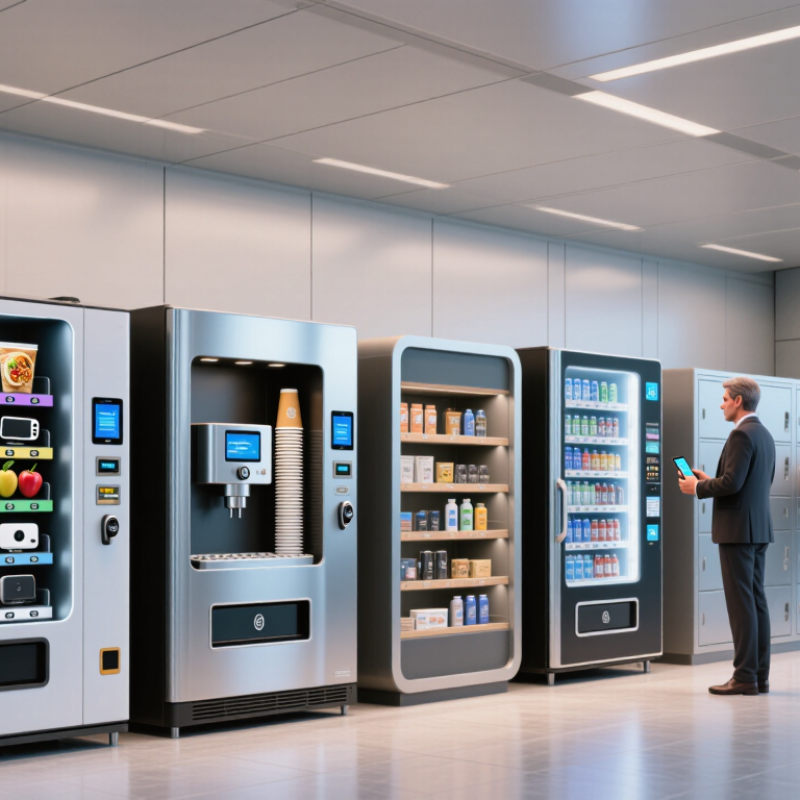
The ten leading applications include snacks, chilled drinks, hot coffee, fresh meals, frozen food, personal care, office supplies, electronics accessories, protective equipment, and parcel collection. Snack and beverage machines suit transport hubs and workplaces. Fresh-food units need stronger refrigeration and shorter restocking cycles. Coffee machines require water filtration, cleaning routines, and stable power. Electronics units need secure compartments and clear product visibility. Parcel machines depend on accurate locker sizing and reliable connectivity. The best choice is practical.
Reports do not always agree. Product definitions vary across studies. That deserves attention. A low purchase price can hide high servicing costs, waste, or payment failures. Buyers should request local sales data, maintenance response times, temperature records, and spare-part availability. Operators with field experience can reveal problems that brochures miss.
Tips: Map customer demand by hour. Test payment methods before launch. Leave space for service access. Measure expired stock weekly. Do not assume one format fits every country. Small pilots often expose weak assumptions.
Top 10 Vending Solutions for Global Buyers
Classifying Vending Machine Types by Application
The chart presents an estimated global application mix for vending equipment. Snacks, beverages, and combination machines represent the largest demand areas, while fresh food, hot drinks, healthcare, electronics, personal care, pet supplies, and frozen food serve more specialized locations.
Data basis: 2024 industry segmentation estimates synthesized from publicly available vending-market research and application classifications. Percentages are rounded and intended for market comparison rather than company-level reporting.
Comparing Features, Costs, and Payment Technologies
Top 10 Vending Solutions for Global Buyers
Comparing Features, Costs, and Payment Technologies
Global buyers should compare vending solutions by operating conditions, not appearance alone. The leading ten categories include snack, beverage, combination, fresh-food, frozen-food, coffee, water-refill, personal-care, locker, and compact counter units. Each serves a different sales pattern. A refrigerated machine needs reliable temperature control and higher energy planning. A locker system may reduce product loss but requires stronger software support. Field testing matters. A bright screen cannot fix poor delivery accuracy.
Costs extend beyond the purchase price. Buyers should measure installation, shipping, customs, electricity, connectivity, payment fees, cleaning, and replacement parts. A low-cost unit can become expensive after repeated service visits. Ask for a three-year maintenance estimate. Also check whether technicians and spare parts are available locally. That detail is often missed.
Payment technology strongly affects conversion. Card readers, contactless payments, QR codes, mobile wallets, and cash acceptance can serve different markets. Multi-language screens help international users. Remote monitoring can show inventory, temperature, failed transactions, and collection needs. Offline payment fallback is useful, though it may increase transaction risk. Security standards and data handling rules must be verified in each target country. I once focused too heavily on payment speed and overlooked refund handling. That was a costly lesson. The best solution is not always the most advanced one. It is the unit that matches customer habits, local infrastructure, product temperature, and realistic service capacity.
Evaluating Suppliers, Compliance, and International Logistics
Top 10 Vending Solutions for Global Buyers
Selecting vending equipment internationally requires more than comparing prices.
A reliable supplier should provide factory audit records, product test reports, warranty terms, and clear production timelines. Ask whether each machine supports local voltage, payment methods, languages, and climate conditions. Small details matter. A humid coastal warehouse needs stronger corrosion protection. A remote site needs accessible spare parts.
Compliance must be checked before payment.
Request electrical safety documentation, material declarations, electromagnetic compatibility records, and relevant market approvals. Confirm the documents match the exact model, not a similar machine. Review data protection practices when machines collect customer information. Product labels, manuals, and warning notices may also require local-language versions. I have seen buyers trust incomplete certificates because the supplier answered quickly. Speed is not proof.
International logistics can change the real cost.
Compare shipping dimensions, pallet strength, container loading plans, insurance, customs responsibilities, and Incoterms. Confirm the correct tariff classification with a qualified customs adviser. Also request a pre-shipment inspection, photo evidence, and serial-number records. A small pilot order exposes weak packaging, confusing software, or slow technical support before a large purchase. No checklist is perfect. Supplier communication can still fail across time zones, and replacement parts may arrive late. Build realistic service allowances, test the machine in its destination environment, and keep written approval records for every specification.
Selecting and Implementing the Right Vending Solution in Each Market
Selecting a vending solution globally requires more than comparing cabinet prices. Local demand, payment habits, climate, and service access shape performance. A 2024 Grand View Research analysis estimated the global vending machine market at over USD 20 billion. However, market estimates differ because researchers define vending categories differently. That uncertainty deserves attention.
Begin with the purchase occasion. Refrigerated machines suit offices and transport hubs with steady daytime traffic. Heated-food units need stronger cleaning routines and reliable power. Smart lockers can reduce queue pressure where customers prefer collection.
Worldpay’s Global Payments Report 2024 found digital wallets represented about 30% of global point-of-sale transaction value in 2023. Therefore, mobile payments should be tested locally, not assumed universally. Some markets still prefer cards, cash, or QR payments. Keep options flexible.
Implementation is less glamorous, but it decides the result.
Measure daily transactions, product waste, refill time, temperature stability, and payment failures. A small pilot near a busy station can reveal more than a large spreadsheet. Operators should also check local accessibility, electrical standards, data rules, and consumer protection requirements. The Global Digital Payments Report shows rapid growth in cashless use, yet adoption remains uneven between regions. A perfect global template does not exist. Even careful pilots can misread seasonal demand. Review the data after four weeks, then adjust product mix, pricing, and service frequency before scaling.